

Service
Rubber lining of pipes, tanks and mixers
Chloroprene and natural rubber lining for any abrasive, corrosive or chemical duty — slurry and ash-water lines, process and storage tanks, mixers, launders, chutes, valves, pump casings and flotation cells. Grit blasting, priming, lining and holiday spark testing to a quality control plan with client hold points, in power generation, mining, water treatment and petrochemical plant alike.
EvidenceSlurry plant, Main Contractor 2025
RoleMain Contractor, Oct 2025
PreparationISO 8501-1 Sa 3 · 40–60 µm
TestingThickness · hardness · adhesion · spark
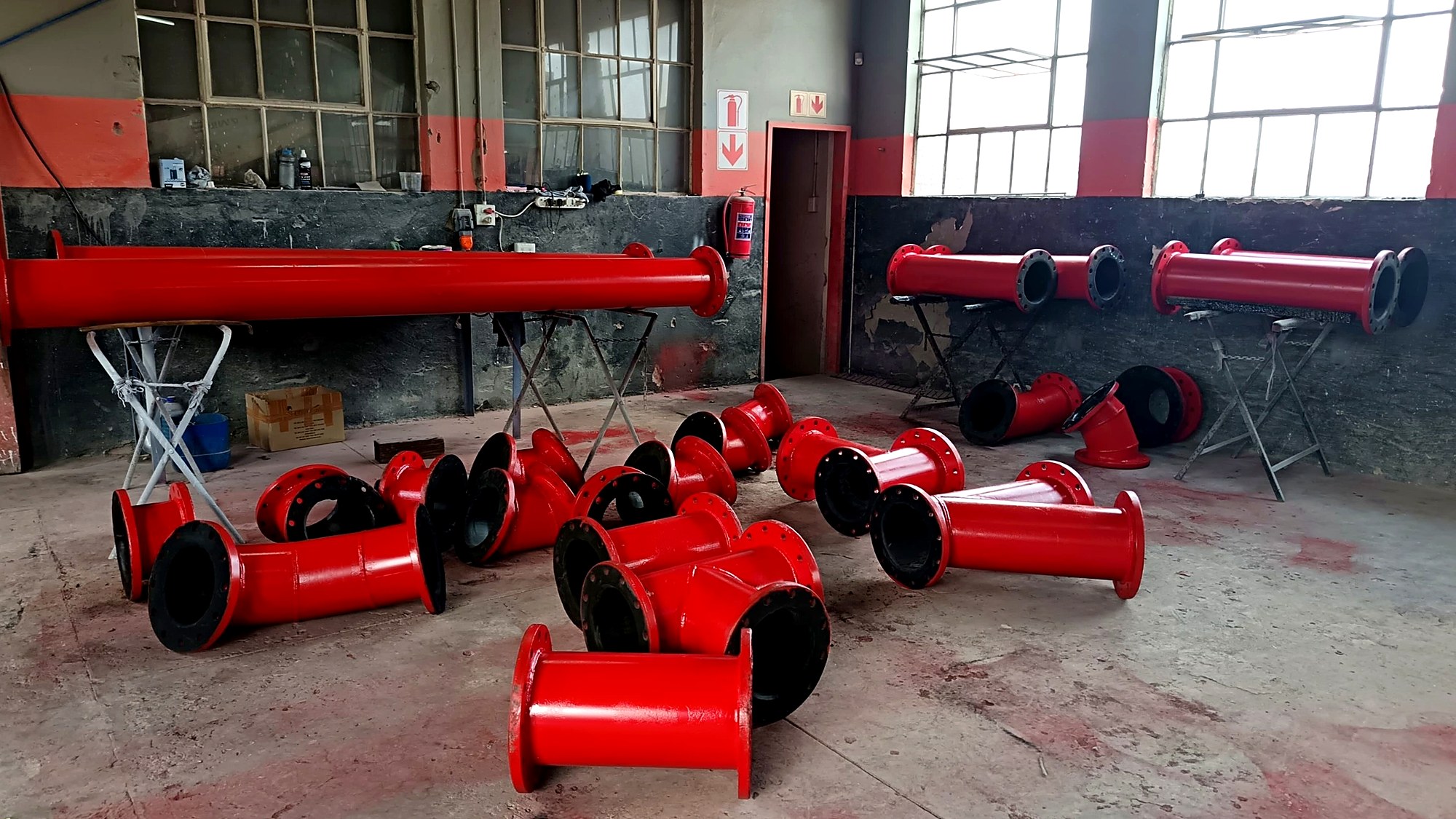
Abrasion, corrosion and chemical attack destroy unlined steel. Rubber lining protects it for years — but only when the surface preparation, adhesive, rubber and cure are controlled and every square metre is tested before the item goes into service. Umbusso Engineers lines pipe spools, fittings, tanks, vessels, mixers, chutes, valves and pump internals in our workshop and on site to a quality control plan with hold and witness points.
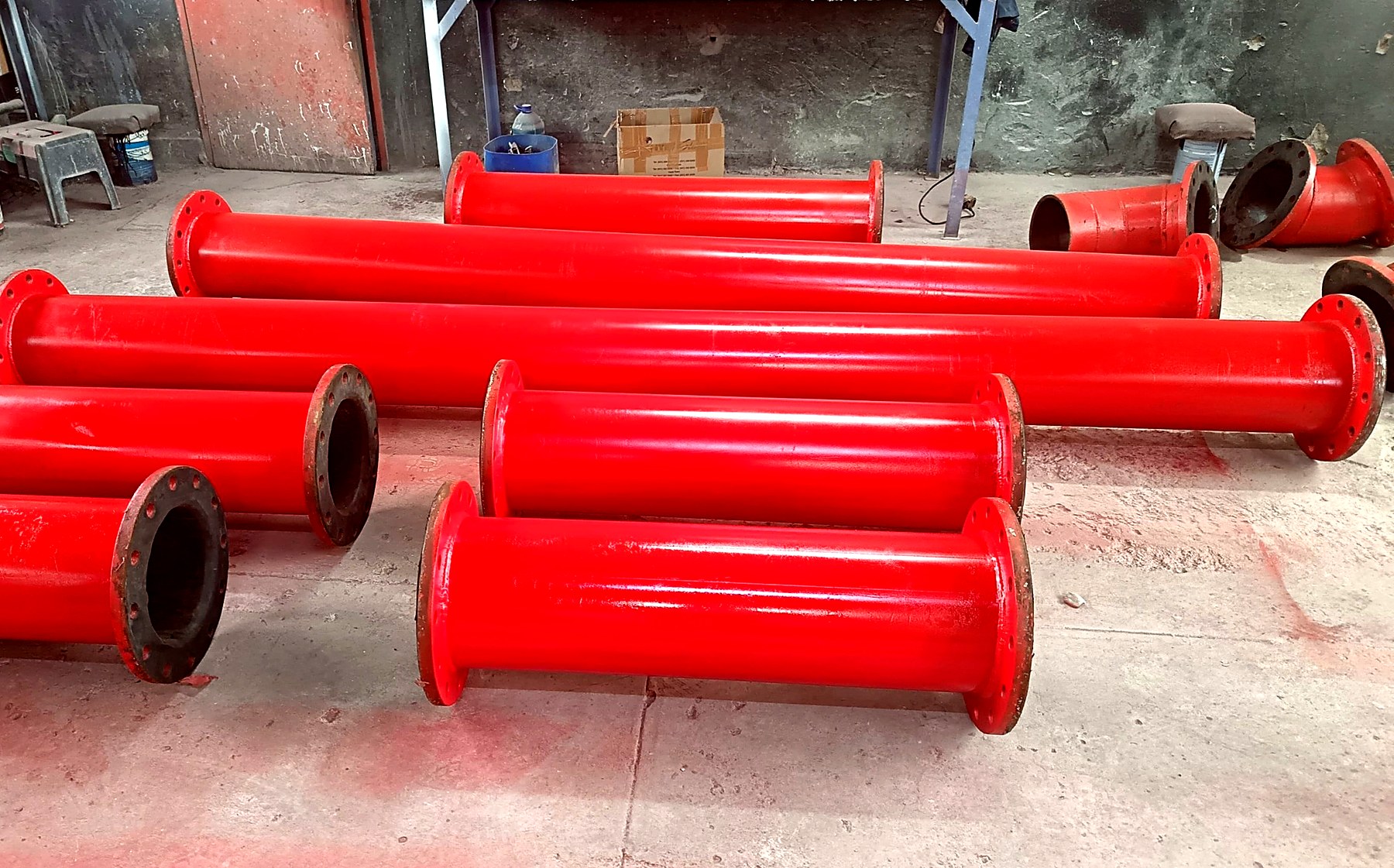
In 2025 Eskom appointed Umbusso as Main Contractor for the replacement and internal rubber lining of the AWRSE tank outlet pipework to slurry Mixers A, B and C at an Eskom power station and the rubber lining of the slurry plant mixers. We fabricated the 250NB and 350NB spools, bends, tees and Y-pieces, lined them with 6 mm chloroprene rubber, tested every item and delivered a full data book that Eskom Engineering and Quality accepted.
Rubber lining is not only a slurry-plant service. Any duty that combines abrasion, corrosion or chemical attack with steel is a candidate: ash and coal-water lines, mill and flotation circuits in mining, dosing and effluent plant in water treatment, acid and process lines in petrochemical works, and the tanks, chutes, launders, valves and pump casings that go with them. The compound is selected for the duty — chloroprene, natural rubber or butyl — not applied as one standard specification.
What we do
- Internal lining of pipe spools, bends, tees, Y-pieces and flanged fittings.
- Lining of tanks, vessels, mixers, launders, hoppers and chutes in slurry, ash-water, process, effluent and chemical service.
- Removal of failed lining, surface repair and relining of existing items.
- Fabrication of the steel spools and fittings to be lined, so one contractor is responsible for the whole item.
- Lining of valves, pump casings, cyclones and other wear components.
- Site relining of fixed equipment under confined-space and permit-to-work controls.
- Compound selected for the duty — chloroprene, natural rubber or butyl — rather than one standard specification for every item.
Standards, quality and documentation
Surface preparation by grit blasting to ISO 8501-1 Sa 3 with a 40–60 µm profile and dust verified to ISO 8502-3 rating 1; primer within four hours of blasting. Adhesive and rubber are installed by tube-pull or manual rolling and stitching with 25–50 mm overlaps and cured at ambient temperature or as specified. Every item is inspected for thickness (specified thickness ±10%), hardness (±5 Shore A), adhesion to ASTM D429 where required, and holiday spark-tested to zero defects. On Eskom work the quality control plan is signed by Umbusso QC, the client’s QC and the client’s engineer.
Where this service applies on the plant
Explore the representative plant environment in the Umbusso Industrial World to see the equipment this service covers.
Proof: work delivered on purchase order
Each project record states the client, the order or contract reference, the scope and the quality documentation it ran under. Contract values are available to prospective clients on request.
Verified from records
Slurry plant rubber lining
Replacement and internal rubber lining of the AWRSE tank outlet pipework to slurry Mixers A, B and C, and rubber lining of the slurry plant mixers, delivered as Main Contractor with a full data book.
Eskom Holdings SOC Ltd · 2025–2026
Read the project record →From the workshop and site
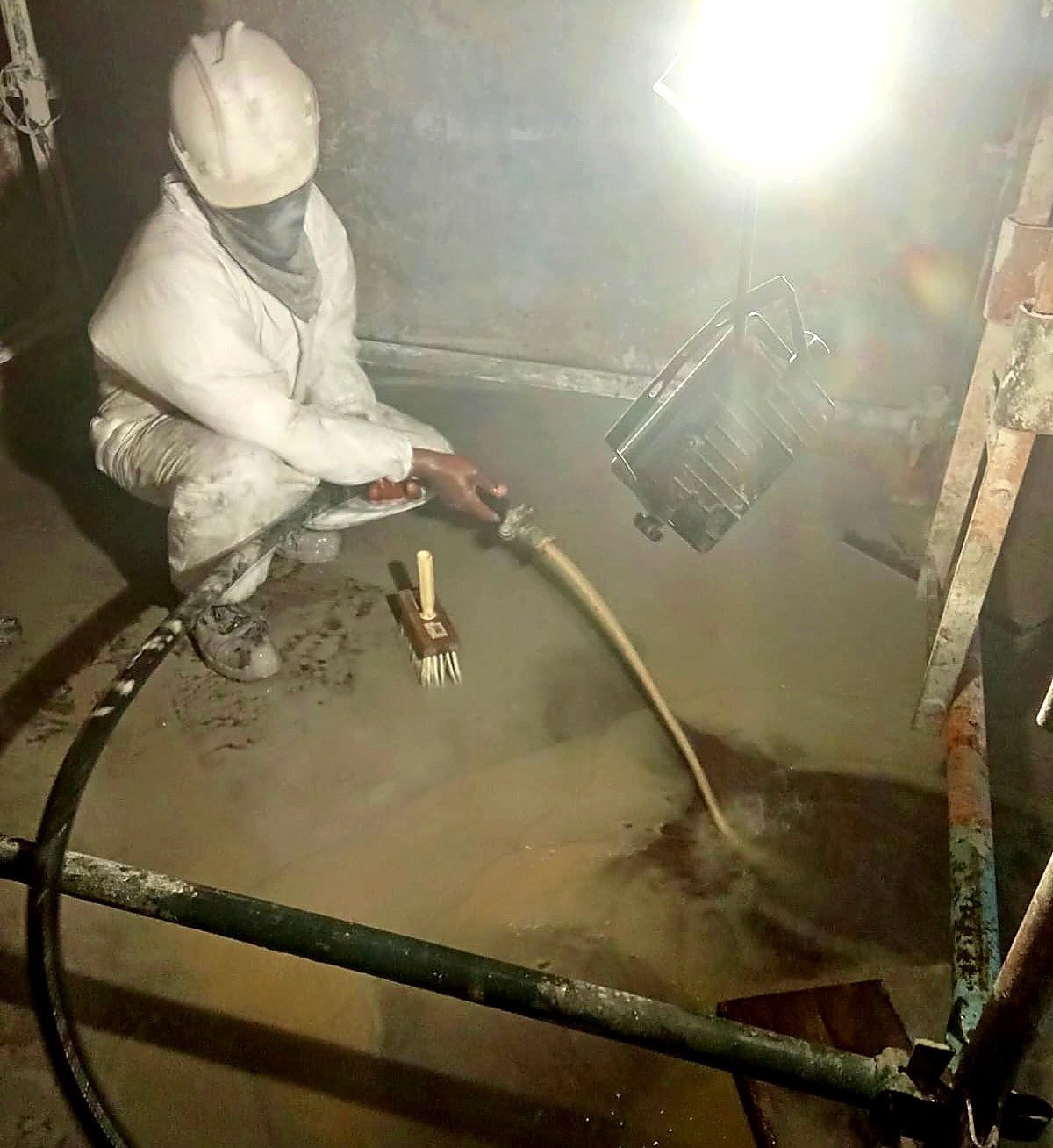
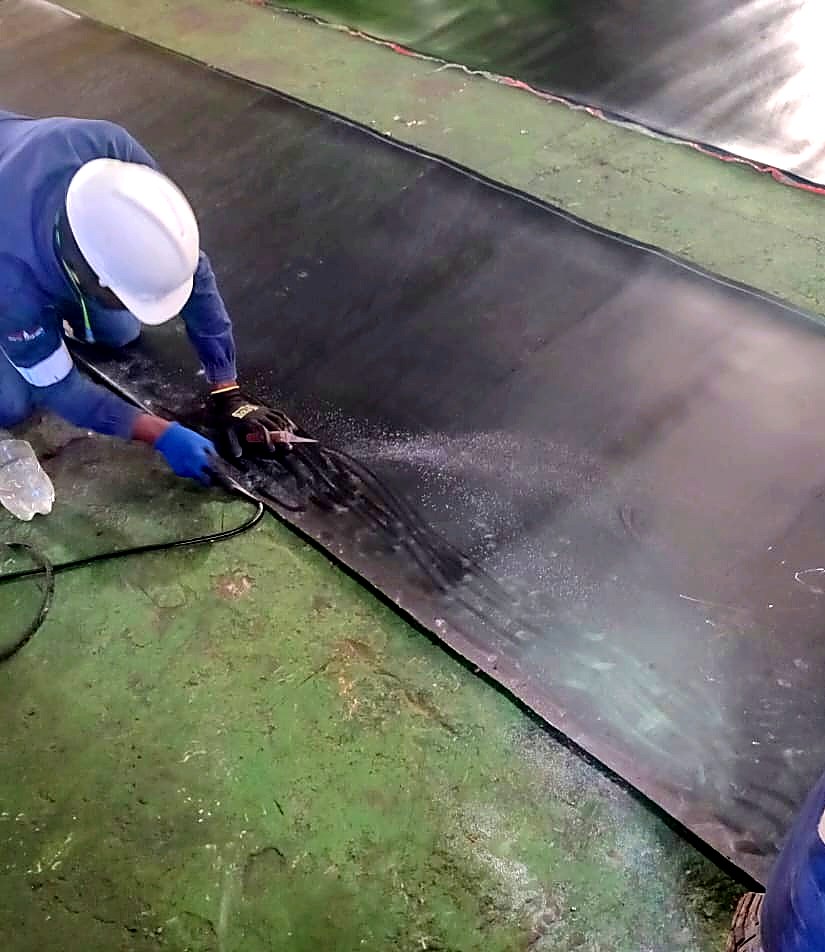


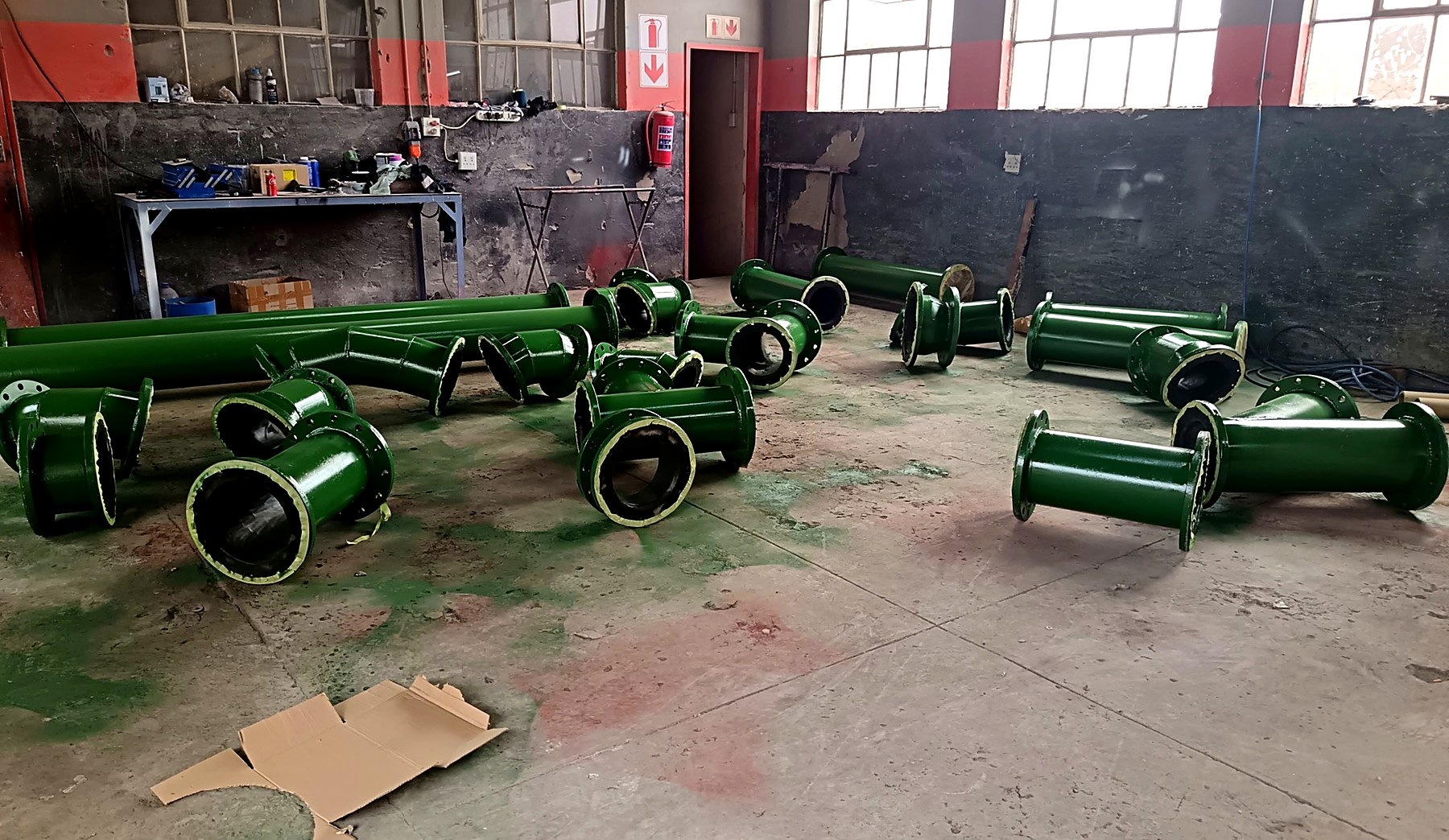
How an order runs
Enquiry
Send the drawing, scope or problem. We reply with questions or a site-visit date.
Site visit and scope
We confirm the scope, access, outage window and your quality and safety requirements.
Quotation and quality plan
Priced quotation with a quality control plan outline so the hold points are agreed before award.
Execution
Work under permit-to-work and the agreed plan, with witnessed hold points and progress reporting.
Close-out
Inspection records, certificates and material traceability compiled into the data book and handed over.
Frequently asked
Which rubber do you use?
Chloroprene and natural rubber compounds selected for the service — abrasion, chemical attack or temperature. The slurry pipework was lined with 6 mm chloroprene.
How do you prove the lining is sound?
Thickness, hardness and adhesion tests on every item and holiday spark testing of the full lined surface, recorded against the quality control plan and witnessed by the client where hold points require it.
Can you line items on site that cannot be moved?
Yes. Mixers and fixed tanks are lined in place under confined-space entry controls, atmosphere monitoring and an approved method statement.
Technical articles on this equipment
Written and reviewed in-house. What fails, why it fails, what the standards require and how to specify the repair.
Rubber-lined pipe and tanks
Specifying and inspecting rubber lining for slurry service: surface preparation, thickness, hardness and spark testing
Rubber lining fails at the preparation stage, not the rubber. This article sets out what to specify and what to witness — blast standard, profile, dust, primer window, thickness, hardness, adhesion and holiday testing — using a slurry-plant scope as the worked example.
Reviewed by the Operations Manager · September 2026
Read the article →Related services
Request a quotation
Send us the drawing, the scope or the problem. We reply with questions, a site-visit date or a priced quotation — whichever gets you an answer fastest.
Office +27 17 007 0135 · WhatsApp +27 72 535 1598 · info@umbussoengineers.co.za
